


アジアの曙


Гео и язык канала: не указан, Русский
Категория: не указана


Youtube
https://www.youtube.com/channel/UCPSYTViL2_pvE_dTSs1Z_3g/featured
odysee
https://odysee.com/$/invite/@瑞鶴の海鷲:d

Связанные каналы  |  Похожие каналы

Гео и язык канала
не указан, Русский
Категория
не указана
Статистика
Фильтр публикаций


General Headquarters of the Against-Communist Volunteer Corps


Against-Communist Volunteer Corps even painted swastikas on their helmets.


Against-Communist Volunteer Corps, 1970s


Location: Ginza Kyukyodo
The content of the placard reads:
"General Headquarters for the Overthrow of the Ikeda Cabinet"
"Against-Communist Volunteer Corps"


Against-Communist Volunteer Corps Women's Division
All members in matching skirt uniforms


The “International Women's and Children's Exhibition” held in Tokyo in 1933
Photographs of the exterior and interior of the “Togo Pavilion,” modeled after a warship, showing a display of dolls depicting boys and girls surrounding Heihachiro Togo, saluting and waving flags


"Nippon," the "Scholar Horse" that caused a sensation at the 1922 Tokyo Peace Exhibition.
When the national anthem "Kimigayo" played at the venue, Nippon would perform a trick where he selected and picked up the Japanese flag.
It is said that he could distinguish not only the national anthems of various countries but also letters and numbers.


Against-Communist Volunteer Corps
1976, near the Hiroshima Prefectural Gymnasium (currently Hiroshima Green Arena)
The slogans on the sound trucks read:
"Reclaim the northern territories"
"Amend the constitution of national ruin"
"Down with the Japan Teachers Union"


Warriors of the Against-Communist Volunteer Corps.
Date unknown


At the head of the procession are three Harley-Davidsons belonging to the Against-Communist Volunteer Corps, followed by the Kikumori Youth League; Tokyo Station.


in the interest of self-defense, Japan looked to those nations as great mentors and learned the art of predatory aggression—effectively becoming their pupil. Perhaps we should summon Commodore Perry back from the grave and put him on trial as a war criminal?

The prosecutor, treated like a mere child, was reportedly left dumbfounded.
The "Perry" referred to here is, of course, Matthew Perry, who arrived on the "Black Ships" in 1853 to compel Japan to open its borders. While he is a widely known historical figure in Japan, he is not necessarily a household name in the US.


The prosecutor looked bewildered, muttering, "Perry? Perry?" clearly unsure of who was being discussed. Seeing this, Ishiwara seized the moment to continue: "What? You don't know Perry? Do you not know your own country's history?" He went on to explain:
At the time, Japan was in the Tokugawa feudal era; it wanted no dealings with other nations and had strictly closed its doors under a policy of national isolation. Then, Perry arrived from your country on a 'Black Ship,' demanding that Japan open its doors and engage with the world. He threatened Japan by firing his cannons—essentially saying, 'If you don't comply, this is what happens'—thereby forcing the country to open its borders and compelling it to enter into relations with other nations. And so, when Japan opened its doors and began interacting with foreign nations, it discovered that the powers of the world were all terrifyingly aggressive, expansionist states. Consequently,


Shortly after the war, Kanji Ishiwara was hospitalized at the Teishin Hospital in Tokyo for medical treatment. Perhaps because his health was poor, he was not arrested as a war criminal. However, one day, an American prosecutor suddenly arrived to interrogate him.

The interrogation spanned several days. On the first day, the prosecutor adopted an aggressive attitude that angered Ishiwara, but the prosecutor on the second day was polite and courteous. Pleased by this change in demeanor, Ishiwara spoke openly and candidly. In the process, he turned the tables and fired questions back at the prosecutor.

"There is talk that the Tokyo Trials should punish war criminals by going all the way back to the Japanese-Qing War and the Russo-Japanese War. What is your view on that?"

The prosecutor replied, "That is indeed the plan." Ishiwara grinned and declared:
"That’s interesting. By all means, go ahead. In that case, you ought to designate Perry as a war criminal. Well? Go fetch Perry."


Advertisement for Matsushita National receiver, 1938.
Citing the progressive example of Germany—where the government is actively promoting the widespread adoption of radios—the argument is made that radios are no longer luxury items and that every Japanese citizen should own one.


Slogan and flag during the February 26 Incident


By 1904, coffee had become a familiar beverage for Japanese Army non-commissioned officers and enlisted men—on par with tea.


Ceremonial ribbon badges from the era of the Empire of Japan
Red and white for celebratory occasions; black for mourning.


Personal effects—including military sword and uniform—belonging to Captain Teruzō Andō, considered one of the ringleaders of the February 26 Incident.


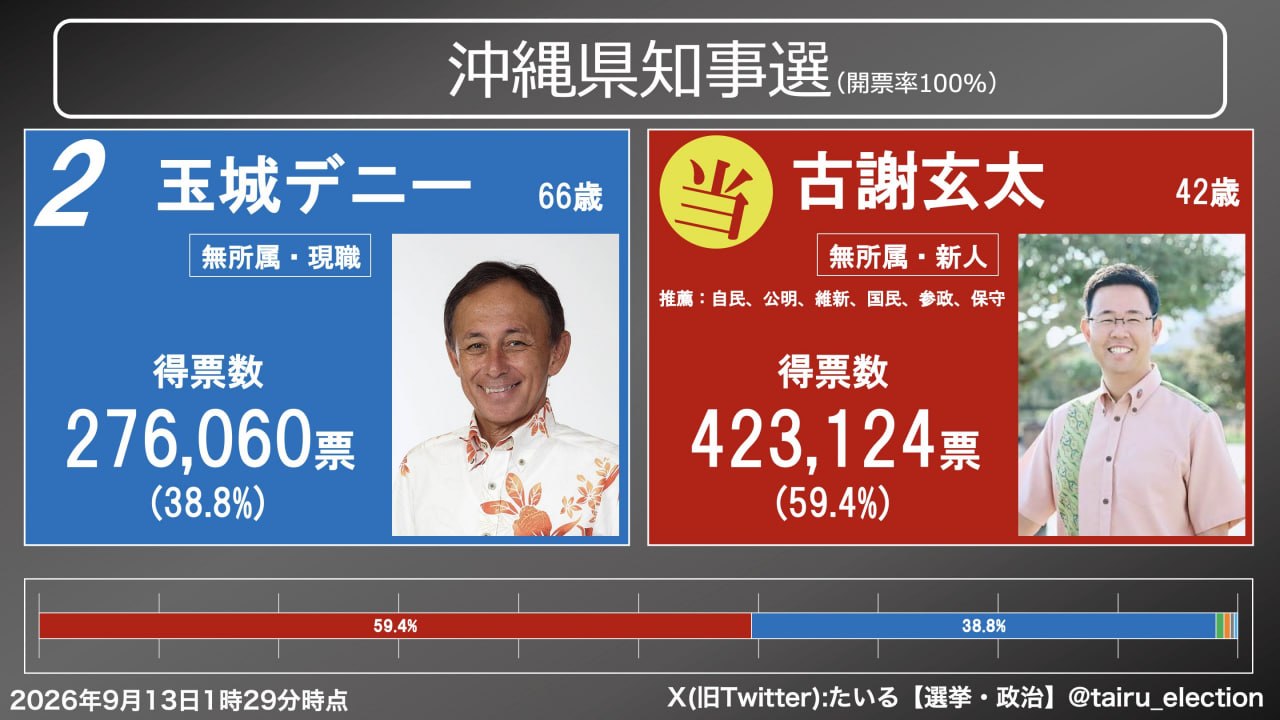
The far-left administration that had controlled Okinawa for twelve years has finally been defeated.
What advanced this process was this year’s Henoko protest boat capsizing incident. This incident occurred when Doshisha International High School, a left-wing school, sent students to participate in Communist Party protest boats under the pretext of a school trip, resulting in student deaths.


Видео недоступно для предпросмотра
Смотреть в Telegram
... "When Chileans see what communism is, when Chileans understand the deceptions, the fallacy, how they are being deceived, they will realize that this government was right"...

Показано 20 последних публикаций.